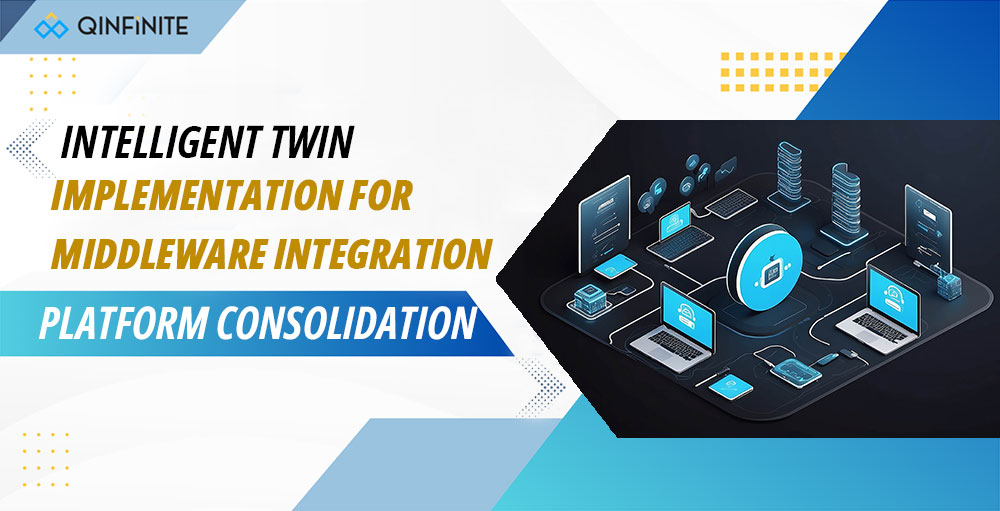
Customer Background: The customer, a large enterprise undergoing frequent acquisitions and mergers, was faced with the challenge of consolidating over a dozen middleware integration platforms into a hybrid integration platform using webMethods and SAP CPI. This consolidation was crucial as the middleware platform was central to their core business operations, connecting over 1000+ internal and external (B2B) applications.
Business Challenge: The primary challenge was to ensure the consolidated platform was robust, scalable, and capable of handling unforeseen issues. Functional and performance testing alone was insufficient; the customer needed a mechanism to understand potential failure points and to prevent or address failures when they occurred.
Objectives:
- Determine potential failure points and root causes of issues.
- Identify scenarios where the platform could fail at the interface or group of interfaces level.
- Ensure a robust, scalable middleware platform for production.
- Provide continuous learning and adaptation to prevent future issues.
Solution Approach:
Phase 1: Building the Intelligent Twin of the Staging Platform
- Auto Discovery: Qinfinite’s Auto Discovery was deployed to map all IT assets, middleware interfaces, infrastructure components, and configurations of the iPaaS platform.
- Knowledge Graph (KG): Constructed a KG to represent the business processes, functions, and their supporting IT systems, capturing the inventory of source and target applications.
- Automation Suite: Configured the KG with Qinfinite’s prebuilt automation suite for middleware platforms.
- Monitoring and Observability: Set up the Auto Detect module to observe infrastructure, applications, and transactions of the middleware platform, transforming the KG into a Digital Twin.
- Chaos Engineering: Conducted chaos engineering experiments to test platform redundancy and determine failure points by injecting failures and changing configurations. The Intelligent Twin used reinforcement learning to simulate and learn from these scenarios.
Phase 2: Transition to Production and Continuous Learning
- Inference Model Transfer: Applied transfer learning from the non-prod inference model to the production environment.
- Continuous Learning: The Intelligent Twin continuously monitored production events, updated its learning, detected familiar issues, and suggested potential root causes for new events.
- BizOps Dashboard: Configured the BizOps dashboard to capture and visualize real-time business process transactions, providing insights into bottlenecks, latency, and anomalies.
Results and Benefits:
- Expedited Production Promotion: The production promotion life cycle was significantly expedited, with fortnightly releases going live smoothly within a 12-month period.
- Reduction in Post-Production Issues: Post-production issues were reduced by 90%, significantly lowering the organization’s benchmark.
- Improved RCA and MTTR: Time taken for Root Cause Analysis (RCA) in production issues reduced by up to 80%, evidenced by a decrease in Mean Time to Repair (MTTR).
- Enhanced Decision Making: The BizOps dashboard provided real-time insights and AI-driven anomaly detection, aiding quicker decision-making in release management.
- Reduced SME Dependency: The inference model complemented expert reasoning and suggestions, reducing the dependency on Subject Matter Experts (SMEs).
Continuous Operations Monitoring: The efforts associated with monitoring configuration and the automation suite were crucial for not just the Intelligent Twin but also for continuous operational monitoring and maintenance tasks, ensuring the overall stability and efficiency of the middleware platform. This proactive approach helped in maintaining optimal performance and quick resolution of issues, thereby supporting the long-term operational goals of the organization.
Stakeholders:
- Integration Platform Directors: Owners of the Middleware platform.
- Platform Architects: Guardians of the platform responsible for its design and scalability.
- Platform Support Team: Ensured smooth operation and issue resolution.
- Business Team: Main beneficiaries who experienced reduced disruption and immediate resolutions during the critical platform migration.
Challenges and Resolutions:
- Skepticism and Buy-In: Initial skepticism and effort concerns were addressed by demonstrating quick wins through early experiments that identified gaps and failure points, gaining confidence from IT managers and architects.
Key Features of Qinfinite:
- Auto Discovery: Regularly discovered and mapped IT assets.
- Knowledge Graph: Created a dynamic and comprehensive representation of the business and IT ecosystem.
- Auto Detect (Observability): Monitored the platform’s infrastructure, applications, and transactions.
- BizOps Dashboard: Provided real-time insights and visualizations of business process transactions.
- Anomaly Detection: Leveraged AI to detect anomalies and predict future events.
- Automation Suite & Builder: Enabled intelligent automation and reinforcement learning-driven improvements.
- Intelligent Twin: Served as the core framework for simulation, learning, and proactive issue resolution.
Conclusion:
The implementation of the Intelligent Twin for the middleware integration platform consolidation not only ensured a robust and scalable platform but also significantly improved operational efficiency, reduced issues, and enhanced decision-making processes. The continuous learning and adaptation capabilities of the Intelligent Twin provided a resilient solution for managing the complex IT ecosystem.