There’s a common assumption in enterprise AI. If you have enough data…AI will work.
But in reality, that’s rarely the case.
The Missing Ingredient Isn’t Data
Most organizations today have:
- vast amounts of data
- modern data platforms
- advanced AI tools
And yet, many AI initiatives fail to deliver expected outcomes.
Why?
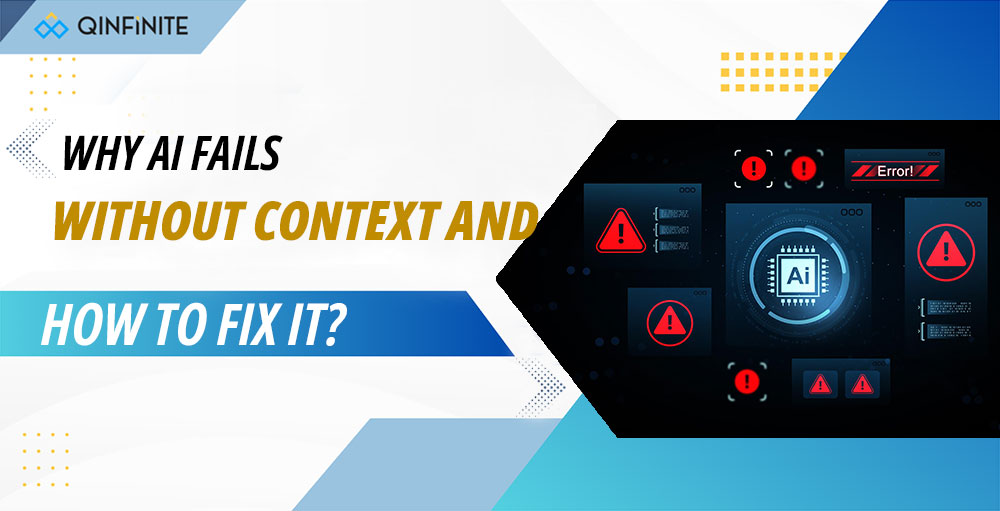
Because data without context is not intelligence
The Problem with Disconnected Data
Enterprise data is spread across:
- applications
- infrastructure
- cloud platforms
- business systems
Each dataset exists in isolation, and while data may be accurate its meaning is often incomplete.
Why Context Matters
For AI to work effectively, it needs to understand:
- relationships between systems
- dependencies across processes
- how data flows through the organization
Without this:
- insights lack relevance
- predictions lack accuracy
- decisions lack trust
From Data to Understanding
The shift organizations need is clear, from collecting data to understanding how data is connected across systems, applications etc.
This is where concepts like:
- enterprise knowledge graphs
- system-level dependency mapping
- real-time digital twins
become critical.
The Role of Context in AI
When AI is powered by context:
- insights become more accurate
- decisions become more reliable
- outcomes become more actionable
Because the system understands not just what is happening, but why as well.
Where Qinfinite Fits In
Qinfinite creates a real-time, connected representation of your enterprise.
By combining:
- continuous discovery
- dependency mapping
- knowledge graph intelligence
It provides the context layer that AI systems need.
This allows organizations to:
- build more reliable AI models
- improve explainability
- accelerate time-to-value
The Bottom Line
AI doesn’t fail because of lack of data. It fails because of lack of context.
The question that helps you separate experimentation from real impact is no longer:
“Do we have enough data for AI?”
It is:
“Do we understand our data well enough for AI to work?”