In most enterprises today, technology decisions are no longer centralized.
- Teams move fast.
- Tools are easily accessible.
- Subscriptions are just a click away.
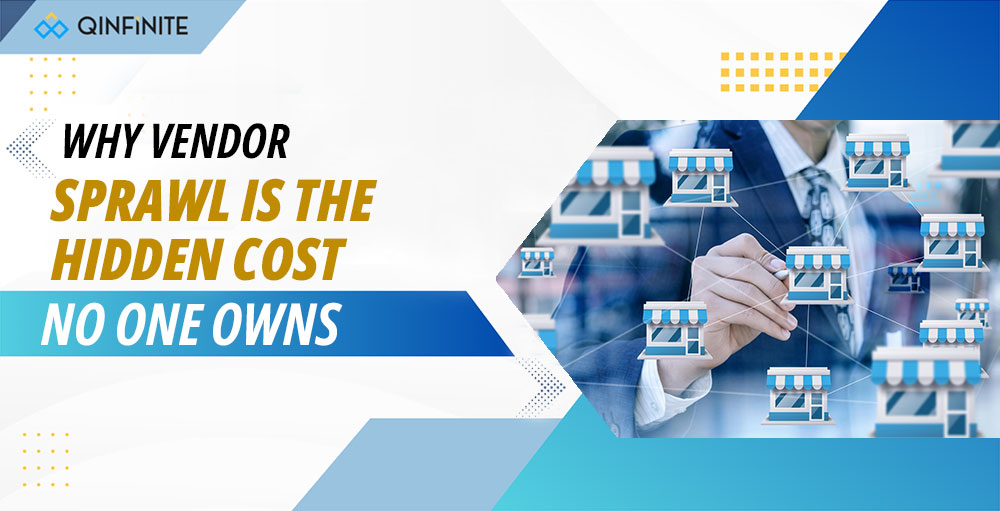
And while this accelerates innovation… it creates something difficult to manage – vendor sprawl.
The Problem No One Fully Sees
Ask any organization how many vendors they work with and you’ll get an estimate, but rarely an exact number.
This is because:
- tools are adopted independently
- contracts are spread across departments
- visibility is fragmented
And over time no single team owns the full picture.
The Cost of Fragmentation
Vendor sprawl doesn’t just increase the number of tools.
It creates:
- duplicate solutions
- overlapping functionality
- underutilized licenses
And these costs are often hidden across budgets which means they often go unnoticed.
Why Traditional Procurement Struggles
Procurement teams are designed to:
- negotiate contracts
- manage vendors
- optimize costs
But they rely on declared information and not on real-time system visibility. So decisions are often based on incomplete data, outdated inventories and assumptions about usage.
The Missing Link: Usage Intelligence
To truly optimize vendors, you need to understand:
- what is being used
- how often
- by whom
- for what purpose
Without this your vendor optimization efforts appear to be guesswork.
From Vendor Management to Vendor Intelligence
There is a clear shift happening from managing vendors to understanding them.
This includes:
- continuous discovery of applications
- real-time usage tracking
- identification of redundancy
- alignment with business value
Where Qinfinite Fits In
Qinfinite provides a unified view of your entire application and vendor landscape.
By combining:
- SaaS discovery
- usage intelligence
- cost visibility
- ownership mapping
It enables procurement teams to:
- identify all vendors across the organization
- eliminate duplication
- optimize contracts
- improve governance
The Bottom Line
Vendor sprawl is not just a procurement issue it is a problem of visibility, cost and control from a vendor management perspective.
The relevant question that determines where true optimization begins is no longer:
“How many vendors do we have?”
It is:
“Do we understand what each vendor is actually delivering and at what cost?”